
Seasonal Foraging on the Mersey: What to Find and Avoid
The Mersey’s edges are generous. Between the saltmarsh below Heswall and the pinewoods at Formby there is a free larder that changes every few weeks, and most of it is reachable on foot or by a short bus ride out of Liverpool. You do not need much kit. A cloth bag, a pair of scissors, gloves and the patience to learn one plant properly each season will do more for you than any app.
What follows is a month-by-month guide to what is worth picking around the estuary, what will make you ill, and the rules that keep the whole thing legal and decent.
Check the Rules Before You Pick Anything
In England and Wales, picking wild fruit, foliage, flowers or fungi for your own use is generally not theft, provided you leave the plant intact. Digging up a plant, or gathering anything to sell, needs the landowner’s permission. That is the short version. The details depend on where you are standing.
- Personal use only. Selling what you gather without permission is a different legal question, whatever the crop.
- No roots, bulbs or digging. If you cannot harvest it without pulling the plant apart, walk on.
- Know your land. Council parks, National Trust estates, local nature reserves and Sites of Special Scientific Interest each have their own rules and bylaws. Ask before you assume.
- Some plants are protected. A small number of wild species are legally protected from picking. If you cannot identify it, do not take it.
- Take a third, not the lot. Pick from large patches, leave the strongest plants, and never strip a bush the birds are working through.
Access is a separate matter from picking. The right to roam over open country covers walking and recreation rather than harvesting, so do not treat mapped access land as a free supermarket. If you are unsure about a particular site, the landowner or the local authority is the person to ask, and for anything commercial it is worth taking proper advice.
Spring: Wild Garlic, Nettles and the First Greens
March and early April
Start with nettles. The top four leaves of a young plant, picked before the flowers open, make a decent soup once blanched. Three-cornered leek appears along shaded lanes and hedgerows, easy to spot by its triangular stem and the garlic smell when you crush a leaf. Hairy bittercress grows in every damp corner and tastes peppery. Dandelion leaves, sorrel and chickweed fill out a salad in the same weeks.
Late April and May
Wild garlic carpets the wooded lanes of the Wirral and the Cheshire fringes, and it is at its best before the white flowers open. Take leaves from the middle of a large patch, never from a small clump. Gorse flowers make a bright, coconut-scented infusion. By the end of May, elderflower is opening on the warm south-facing hedges, and pineapple weed is pushing up through compacted gravel on towpaths and old railway lines.
Summer: Elderflower, Berries and Saltmarsh
June. Elderflower cordial season. Pick the heads on a dry morning when the pollen is still loose, and use them the same day. Meadowsweet is flowering in damp ground — good for a light tea, and a useful marker of wetter, softer ground underfoot.
July. Cherry plums, wild raspberries and the first blackberries. Bilberry patches on the lowland heath edges give small, intensely flavoured berries if you have the patience to pick them. Sea buckthorn is already forming its orange fruit on coastal scrub; it is mouth-puckering raw, so freeze or cook it.
August. Blackberries at full tilt, elderberries darkening, rosehips and rowan starting. Marsh samphire can be picked from saltmarsh in small amounts for the pot, but many estuary sites are protected, so check the designation before you set foot on the mud. Never walk out onto estuary mud to reach a better patch — the tide comes in fast and the ground is softer than it looks.
Autumn: The Busiest Season
September and October
Sloes, crab apples, damsons, hazelnuts and sweet chestnuts. Sloes are bitter until the first frost, or you can freeze them at home and get the same effect for gin. Hazelnuts are worth gathering only where you find them before the squirrels do. Field mushrooms appear on pasture and verges after a warm, wet spell; cut them cleanly and leave the root in place.
November
A late flush of blackberries, rosehips for syrup, and the last of the rowan. Rowan berries are bitter and best cooked into jelly or sauce rather than eaten raw. It is also the month for fungi in the birch and pine woods, where chanterelles hide in the leaf litter.
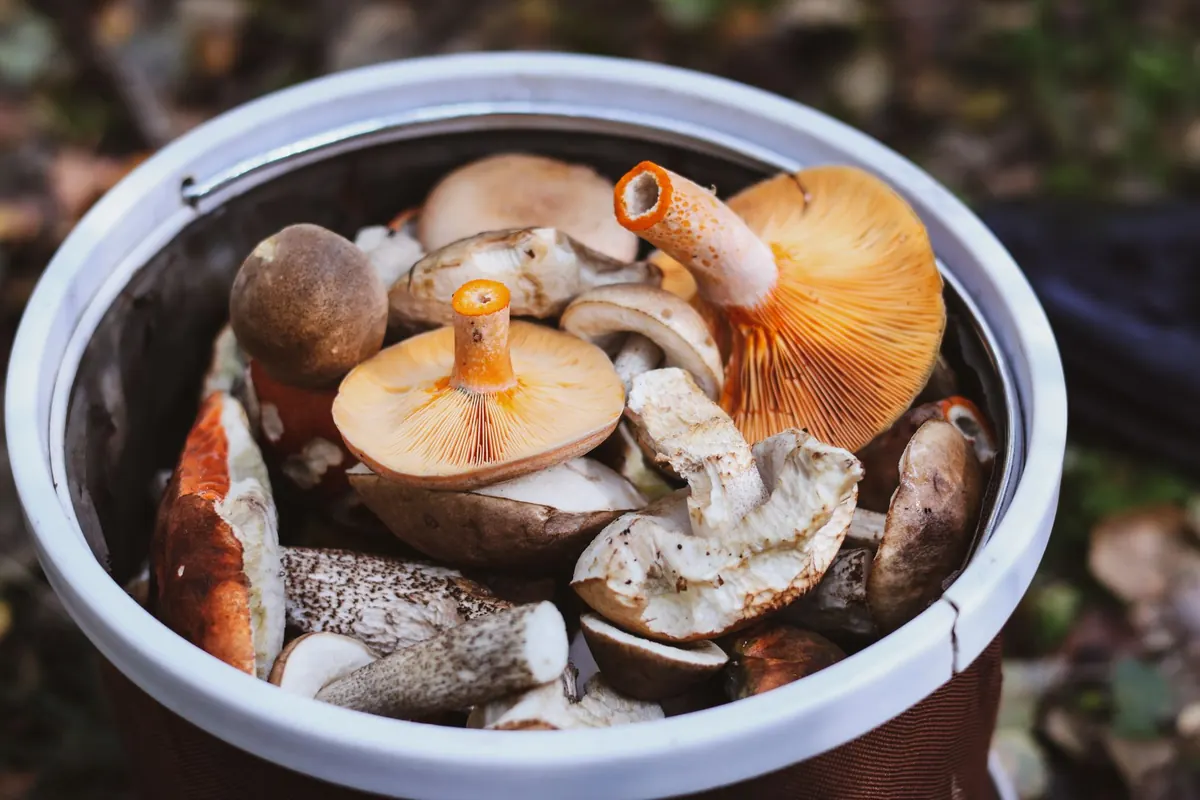
Fungi deserve their own warning. Learn one species at a time, learn it in several places, and check every feature: cap, gills, stem, smell, spore print, and what it is growing beside. A book or an app is a starting point, not a guarantee. The mistakes that matter are not stomach upsets.
Winter: What Survives the Cold
December and January. Sea buckthorn berries hold on the bush and are best after frost. Rosehips and sloes linger. Hairy bittercress and wintercress keep growing in sheltered ground, and gorse flowers appear on mild days. Dandelion roots can be lifted for roasting, though you should leave the plant enough to regrow.
February. Three-cornered leek is already back, and wild garlic leaves start showing in mild years. Nettle shoots return on south-facing banks. Cockles and mussels are gathered from the Dee and Mersey estuaries, but the beds are classified and sometimes closed for health reasons, and local bylaws apply. Check the current position before you collect anything, and never take shellfish from a closed bed.
Lookalikes Worth Learning by Heart
Most foraging injuries come from confidence, not ignorance. These are the confusions that catch people out locally.
- Wild garlic vs lily of the valley and autumn crocus. All three have broad, soft leaves and grow in the same shade. Crush a leaf: real wild garlic smells unmistakably of garlic. No smell, no picking.
- Hemlock water dropwort vs wild celery or parsley. It grows in wet ditches and beside streams, and it is one of the most poisonous plants in the country. Do not pick any umbellifer from wet ground unless you are certain.
- Field mushroom vs yellow stainer. Cut the stem base. A yellow stainer bruises bright yellow and smells of ink or disinfectant.
- Chanterelle vs false chanterelle. A true chanterelle has blunt, egg-yellow ridges running down into the stem and a faint apricot smell. False chanterelle has proper gills and grows on rotting wood.
- Yew. Never eat a red berry from a conifer. The flesh of the yew aril is not the problem; the seed inside is seriously toxic.
If you or someone with you eats something suspect, seek urgent medical help and take a sample of the plant or fungus with you.
Before You Set Out
- Check tide times if your route touches the estuary, and tell someone where you are going.
- Carry a basket or cloth bag rather than a plastic one, so berries do not crush.
- Avoid roadside verges, sprayed ground, and the low hedges every dog in the neighbourhood uses.
- Wash everything, and cook or infuse anything bitter — elderberries, sloes, rowan, sea buckthorn.
- Take only what you will actually use, and leave the site looking untouched.
- Start with three plants you can identify with your eyes shut. Add one more next spring.
The reward is not a full freezer. It is knowing your own stretch of the Mersey well enough to notice it change every fortnight, and knowing exactly what you are putting in the pan.
Photo: Lora Rikky / Pexels